
How Pragmatic AI is Sparking a Quiet Revolution in Retail

Photo by Luke Jones on Unsplash
Many teams probably wish they had J.A.R.V.I.S., Tony Stark’s sophisticated AI assistant who not only takes care of the internal systems at Stark Industries but is also responsible for maintaining the Iron Man suits.
In reality, we’ve witnessed how much AI has impacted the retail space over the past years. Competitive retailers no longer want to know if AI works; instead, they want to know if it helps reduce Cost of Goods Sold (COGS), which is the direct cost of making a product.
A report by Gartner states that global retail technology investments are forecasted to reach $388 billion by 2026, and AI-related expenditures will grow by close to 25% annually. These trends pose a potential challenge to brands who haven’t updated their systems but will provide significant advantages to those with solid data foundations and intelligent retail technology.
There will also be a switch from “lab projects” (i.e. theoretical tools) to tools that are operationally ready. Pragmatic AI will be defined by systems prioritizing function, with a focus on bottom-line impact.
Let’s explore how AI is preparing retail teams for the road ahead.
“Global retail technology investments are forecasted to reach $388 billion by 2026, and AI-related expenditures will grow by close to 25% annually.”
(Source: Gartner)
How Agentic AI is Preparing Retailers for the Future
If we look back at 2023 – 2024, most retailers focused on deploying bots that talked too much while attending customer inquiries yet were incapable of doing much else. That era has now passed.
In a Forrester article on enterprise tech trends, 2026 is being described as a defining year for AI agents. They are now far more autonomous and can plan, reason, connect with external services, and execute more complicated, multi-step tasks with limited supervision.
In mid-October 2025, retail chain monolith Walmart partnered with OpenAI to launch an “AI-first shopping” experience, enabling consumers to complete purchases within ChatGPT via the Instant Checkout feature.
Instead of the user asking where a specific mattress is, they provide AI with the instruction to purchase the best mattress under $1,000. The AI agent then uses Agentic Commerce Protocols to complete the transaction, reducing the “friction-to-transaction" time from minutes to seconds.
Data Maturity is a Competitive Advantage in Retail
For retailers to be truly competitive, they must look beyond their inventory and focus on how advanced their organization’s data analysis is, also known as its data maturity. This widens their competitive moat and strengthens predictive analytics, advanced personalization, and operational efficiencies.
Another clear advantage that data maturity delivers is the ability to use proprietary customer insights to optimize pricing and develop tailored experiences, leading to customer loyalty that competitors can't copy so easily.
In 2026, retailers will also increase their investments in Edge Computing and Zero-Trust Architectures to address data demands in real-time and enhance security to tackle ongoing cyber threats and omnichannel expectations.
It’s important to note that well-governed, high-quality data is essential for top-performing retailers to trust AI to be reliable enough for autonomous decision-making. This data must also be explainable, continuously monitored, and traceable to avoid errors.
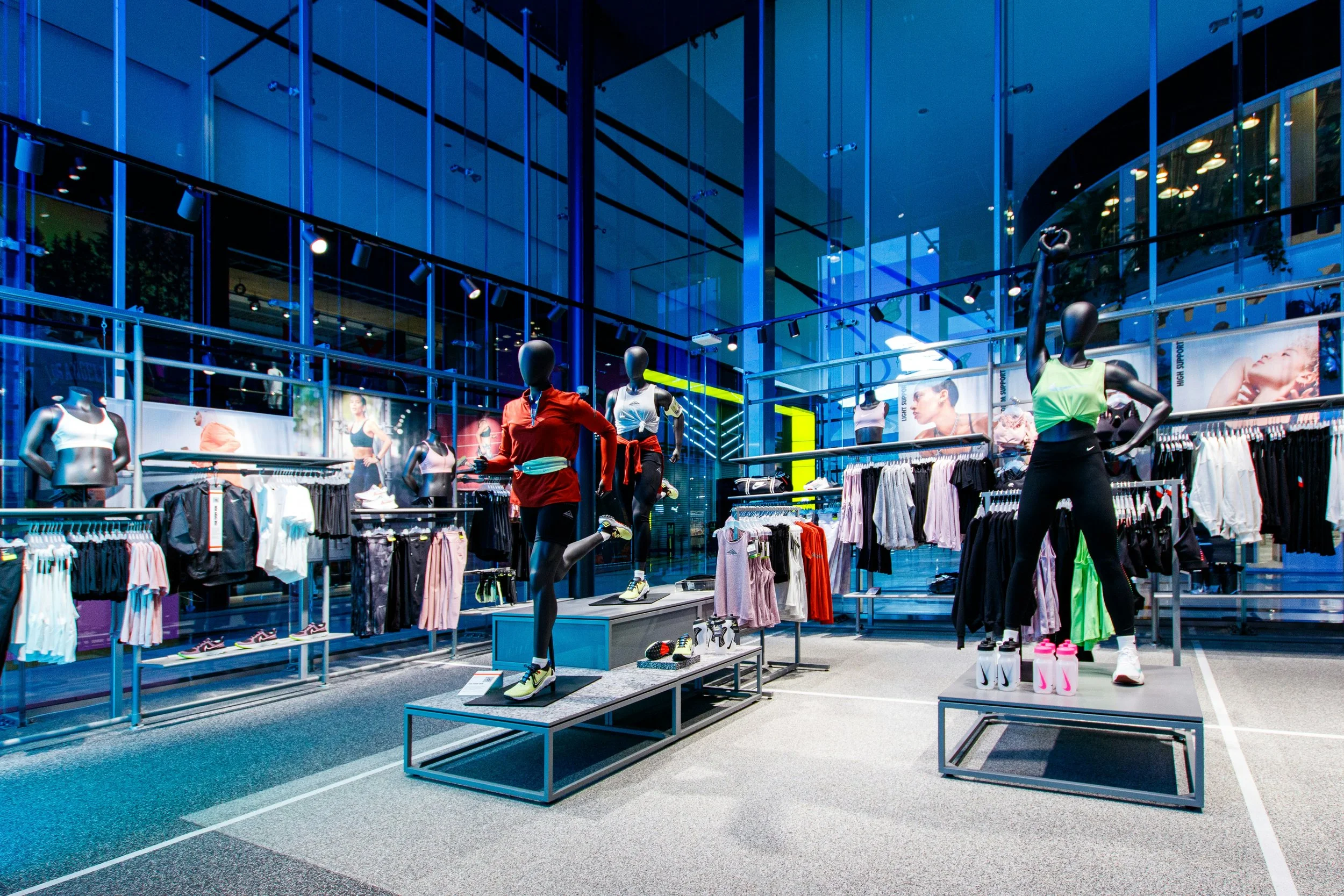
Photo by Craig Lovelidge on Unsplash
Brands That Have Leveraged AI as their Silent Co-Pilot
A 2025 study conducted by CapitalOne highlighted that around 26% of consumers in the U.S. returned clothing purchased online, which is the highest rate in the retail sector.
This reveals a disconnect between consumers’ expectations and what retailers can realistically deliver.
How are retailers leveraging AI to address this challenge?
Sephora rolled out its AI-powered Virtual Artist tool, allowing consumers to get a virtual makeover via phone or webcam. Since its implementation, there have been significant improvements in conversion rates and a reduction in returns. Future updates to the tool include a “virtual beauty consultant” featuring voice-guided looks and more comprehensive recommendations.
Amazon is pioneering the application of computer vision in retail. Its “Amazon Go” stores features an integration of deep learning algorithms, advanced computer vision, and sensor fusion to deliver a checkout-free experience. Leveraging a computer vision-based “Just Walk Out” approach, the stores are equipped with smart carts powered by AI to track items and monitor shelves. This helps shoppers have a “cashier less” checkout and provides alerts to staff to restock items.
Computer Vision: A branch of AI that enables software to analyze and interpret visual data from cameras or sensors
(Source: euristiq)
Here are some additional ways other retailers are leveraging AI as their “Silent Co-Pilot":
Staffing Optimization: Retail teams use AI-driven tools to monitor staff locations through cameras or wearables to predict peak-hour needs. This helps reallocate employees to speed up replenishment or checkouts.
Inventory Forecasting: Real-time inventory tracking combines edge analytics and IoT sensors, helping retailers to forecast spikes in demand from promotions or weather. This allows teams to foresee disruptions before shortages happen.
Heat Mapping Insights: From smart cameras to Wi-Fi signals, in-store heat maps show shopper flow patterns that actively predict layout adjustments and generate proactive merchandising solutions, instead of waiting on sales data trends
The Human Element is Here to Stay
With the rapid developments that AI, data science, and data technologies are delivering to the retail sector, the ability of employees to adapt to AI has become imperative.
For retail teams to be well prepared, Forrester predicts that 30% of large enterprises will require their employees to undergo some AI training to reduce risk and increase AI adoption.
What teams must understand is this: AI is not here to replace retail employees. It’s here to support and augment their efforts, freeing them up for higher-value interactions and tasks.
“30% of large enterprises will require their employees to undergo some form of AI training.”
(Source: Forrester)
Leverage Pragmatic AI to Stay Ahead in Retail
From autonomous agents performing multi-step tasks to improving customer experience and inventory optimization, 2026 is the year where retailers are moving beyond conducting “lab experiments” with AI into something more industrialized and lane ready.
Retailers who invested in 2025 to clean their data will see how agentic workflows ultimately lead to better and more robust outcomes.
Leverage pragmatic AI to improve your operational efficiency, and remember to also implement continuous experience evaluations and competitive benchmarking to identify service gaps, track competitor activities, and spot shifts in consumer preferences and trends.
AI monitoring and real-time, in-person customer feedback are a winning combination that gives you the best snapshot of your business.
If you have any questions or are looking for a partner to help strategically transform your retail customer experience, drop us a line.