
Why Locking Up Merchandise isn’t Working: Revamping your Loss Prevention Strategy

TL;DR by Tippy
Violent shoplifting and organized retail crime (ORC) are on the rise
Record losses across retail; $112.1B in 2022, an increase of 1.6% in retail shrink (National Retail Federation)
Intrusive security measures are deterring customers, resulting in a sales loss of 16-25% (Forbes)
Customers want a better balance of service and security and often prefer Costco's security measures
Shoppers want more sales associates to deter thefts and assist in experience
Few retail professionals like to talk about Loss Prevention (LP). Even senior staff who work in LP. Retailers just want to help customers get on with their day seamlessly but with the rise in shoplifting, much of which has become increasingly violent, retailers are pressed to keep merchandise on the shelf.
Shoplifting's impact on annual revenue has been catastrophic for the industry, with multiple retailers shuttering stores in hard hit cities such as San Francisco and New York City. The saddest part of this is that customers are losing core shopping fixtures in their communities, to the point that community activists are attempting to stop shoplifters themselves.
According to a 2022 study by the National Revenue Federation, retail shrink – the variance in inventory caused by internal theft, external theft, and administrative errors – skyrocketed to a net loss of $112.1 billion. With the ongoing threat of online retailers poaching customers, brick-and-mortar locations are being bombarded with pressure from all sides; corporate pressures to maximize profits while minimizing losses, and customers who want an enjoyable experience.
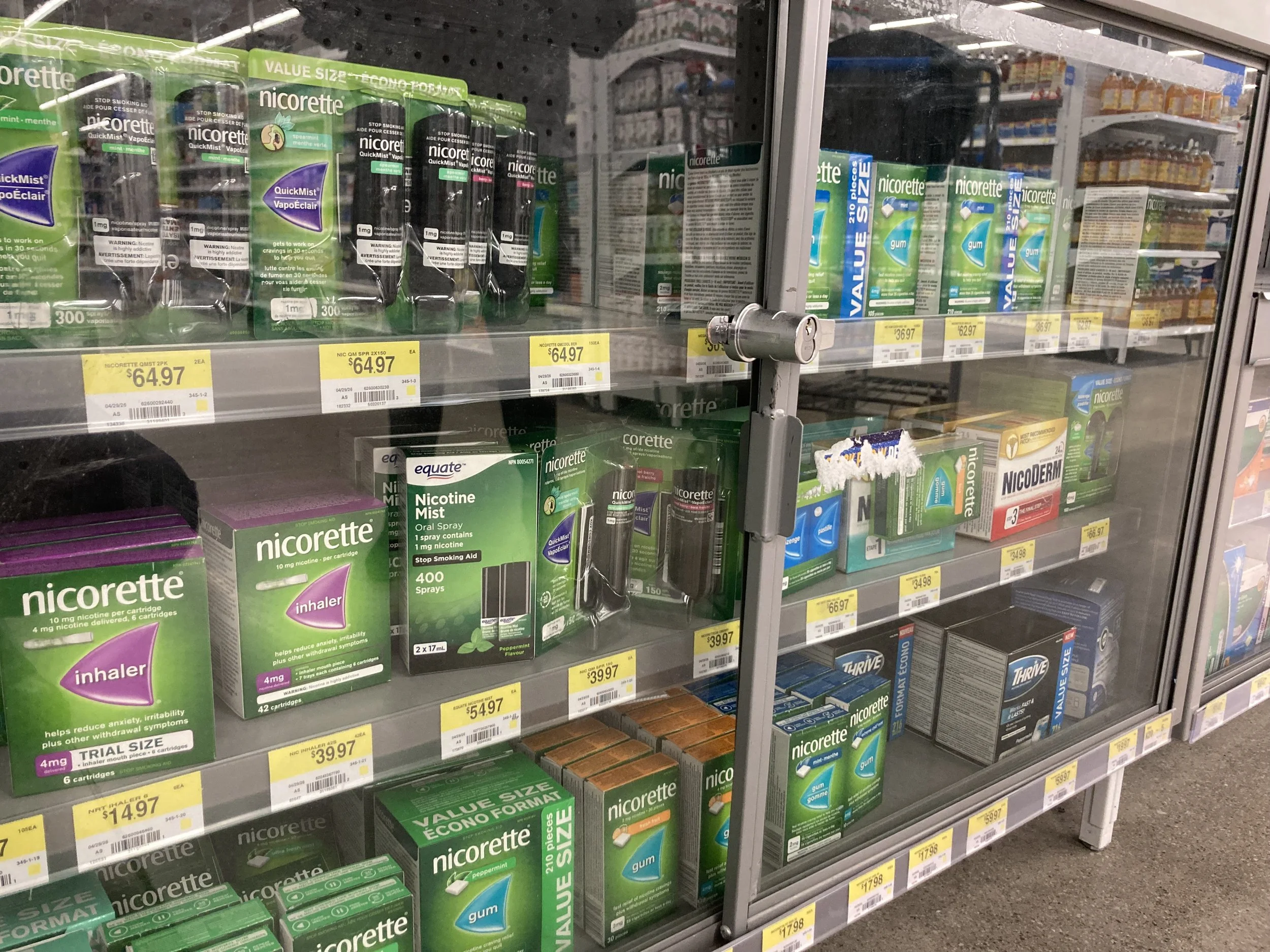
In the current state of LP and security, many retailers find themselves leaning on placing merchandise behind lock and key. RFID tags were not doing enough to deter thefts, so the industry has had to shift towards more intrusive means of theft reduction.
But this has created another problem: it's become too inconvenient for in-store shoppers. Customers are often waiting as long as 24 minutes to obtain everyday items.
So, while thefts may go down, customer experience is being sacrificed in the process, driving customers towards frictionless online shopping.
Let's dive into the root causes behind this influx in locked merchandise and what we can do as retail professionals to better support our customers and our bottom line.
Retail Shrink: the variance in inventory caused by internal theft, external theft, and administrative errors
Retail Shrink has increased. Customers and Retailers are not happy.
Regardless of how you may feel about locking up merchandise, there's one fact that cannot be disputed: retail shrink continues to climb.
And it’s far from surprising. With current market pressures that are driving up the cost of everyday items, the secondary market is ripe with opportunity for stolen goods. Shoplifters are selling “boosted” items on platforms like eBay, Facebook Marketplace, and Amazon, targeting customers that are looking to catch a break on everyday purchases.
Items Shoplifters Often Target: C.R.A.V.E.D.
Concealable
Removable
Available
Valuable
Enjoyable
Disposable
(source: CNN)
Frequently stolen items tend to be smaller but still highly valuable, which is why items like razorblades, toothbrushes, and deodorants are often targeted. Everybody needs them and they are bought often.
With retail crimes becoming increasingly more violent in nature, retailers need a means of LP that mitigates liability and keeps everyone safe. Hence, the introduction of lockable glass cabinets for high-shrink items.
The Loss Prevention Conundrum: Long Wait Times = Lost Customers
Unless it's a Sunday stroll at the mall, most customers want to cross items off their shopping list as quickly as possible. Herein lies the problem with locked merchandise: without adequate staff to manage unlocking cabinets, customers are left waiting... and waiting... and waiting...
So, when items that are supposed to be "grab-and-go" become a shopping ordeal, it's no surprise that we're seeing customers shift to e-commerce platforms. Customers are even more disgruntled when they have to wait for an associate when picking up sensitive items like feminine hygiene products or underwear.
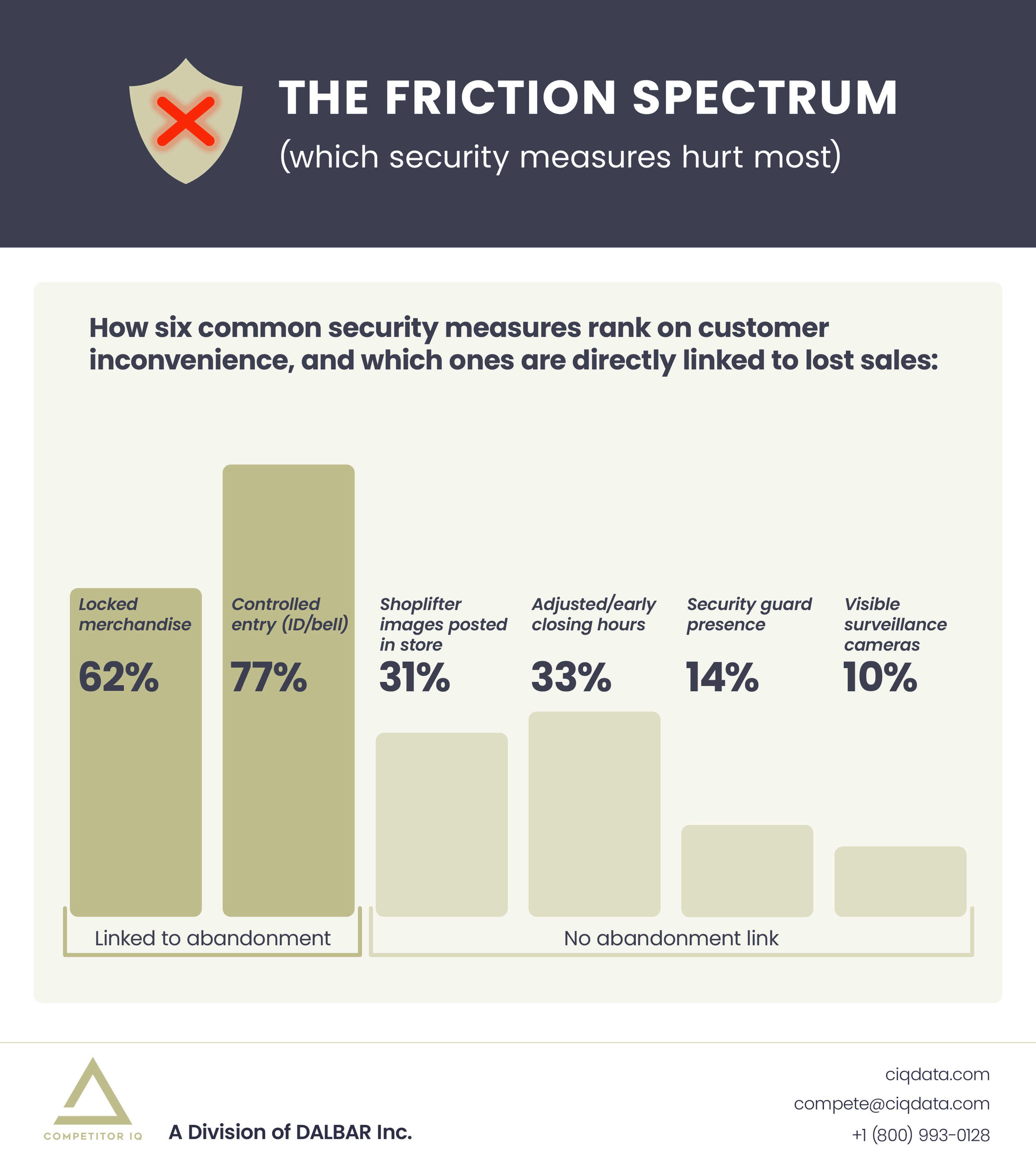
This has resulted in over 38% of customers abandoning their purchase due to loss prevention measures. And the biggest barriers? Locked merchandise that requires an ID or an associate to unlock.
Customers don't have time to wait around – they're on lunch break, have a brief moment in-between appointments, or are on the way home after work – so expecting them to put up with long wait times shows that they are being underserved and underappreciated. According to Forbes, intrusive security measures have resulted in a sales loss of 16-25% for many retailers.
There is a need for balance because retailers without security protocols are going to be susceptible to wide sweeping organized retail crime (ORC). But strategies that are too intrusive cost customer loyalty and erode brand trust.
How Retailers can Mitigate Loss and Retain Customers
We recently surveyed customers and less than half believe retailers are balancing security and convenience adequately. Customers cite that they prefer measures that don’t interfere with their ability to physically interact with products or inhibit their ability to read packaging.
It's important to be mindful of a key reason why customers go to brick-and-mortar locations: to engage with products and knowledgeable associates. If we remove these factors, what incentive do customers have to shop in-person?
Customers mentioned that some strategies such as the presence of security guards, posting pictures of shoplifters, and adjusting store hours don’t hinder their shopping experience. But their biggest preference is for more staffing.
One of their favorite retailers is Costco for its ability to check-in customers expediently, have adequate staff for assistance, and finish the customer experience with a quick receipt verification.
48% of loss prevention professionals acknowledge that security measures are negatively impacting customer experience
(National Retail Federation, The Impact of Retail Theft & Violence 2025
When retailers like Target continue to push forward with more locked cabinets for high retail shrink items, customers are going to be disgruntled. More staff are needed to deter shoplifters and unlock items to shorten wait times.
There have been arguments that it's cheaper to simply lock goods up than to hire more staff or security, but when customers are loud and clear about what they want, how can we continue to ignore them?
Strategic staffing is a solution that benefits all parties. With the use of automated management tools, retailers can accurately forecast foot traffic to mitigate tensions and frictions caused by long wait times.
Teams can also rethink their store layout so that associates are more visible to customers. This also opens up sightlines, reducing blind spots for shoplifters.
Conclusion: Balancing Loss Prevention with Customer Experience
When rampant shoplifting has become an unfortunate reality for retailers, it's up to us as leaders to find solutions without damaging customer experience.
Even though many retailers say that hiring more staff is an expensive solution, it’s even more expensive to sacrifice customer satisfaction. And your customers are loud and clear: they want to see more human faces.
Remember, shoppers aren't against locking up merchandise; they're against having to wait. Customers understand that retailers must deal with brazen shoplifters, but your shoppers need to be considered in this process as well.
Having adequate staff not only makes stores more hospitable and friendly, which online shopping will never achieve, but also helps to deter shoplifters since there are fewer blind spots on the sales floor.
Help create a sustainable shopping environment for both customers and associates by balancing both LP and CX. You’ll retain your reputation and customer loyalty in the process.
Looking for more insights?
Get a copy of Competitor IQ's Retail Security & Loss Prevention Study